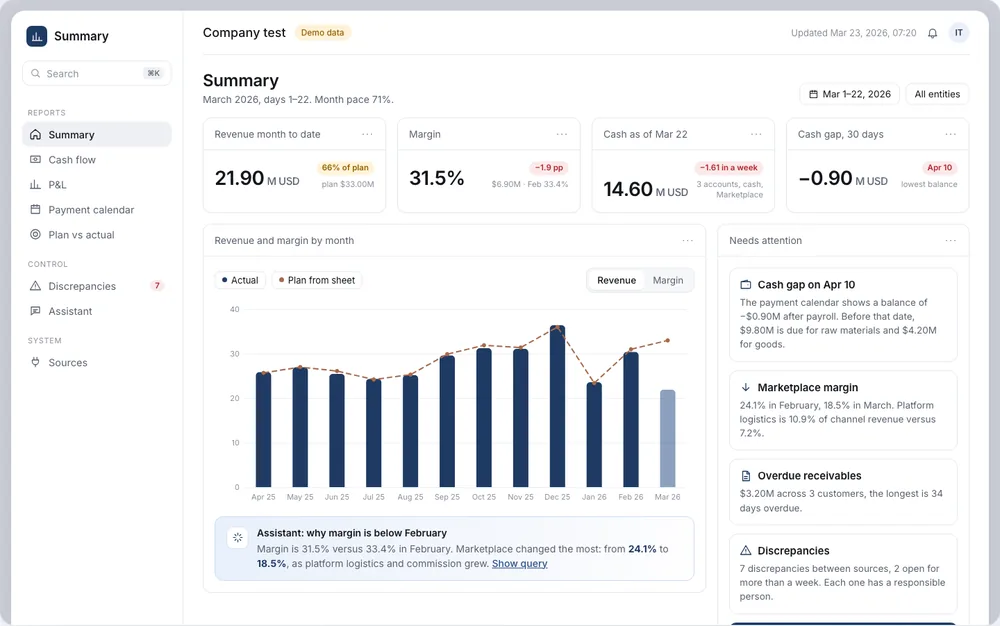
Production

The production manager sees where an order is stuck and why

The shift plan often lives in the supervisor's spreadsheet, and the reasons for downtime are written down after the shift is over. First the order's path through the lines and the places where it waits are analyzed, then workspaces for the line and the production manager are built around that.

Discuss your task: Production

As is and after

Bottlenecks in the standard process

In production, the audit starts with the path of one order through the lines: where it waits and why.

An order across production lines
  1. 01StartPlan in supervisor's spreadsheetShortage at order start
  2. 02MaterialShortage seen at order startSequence in the supervisor's head
  3. 03ExecutionReadiness checked verballyDowntime with no reason
  4. 04CompletionDowntime with no reason

The supervisor knows the order sequence, material is checked at order start, and the reasons for downtime are lost by the end of the shift.

Bottlenecks in the standard process

  • Shortage at order startA shortage of components is discovered when the order has already reached the line, and work stops.
  • Sequence in the supervisor's headOne person decides the order sequence and line load, and changes are passed on verbally.
  • Downtime with no reasonDowntime is recorded without a reason, so there is no way to tell what recurs most often.
Workspaces

Each employee gets their part of the process

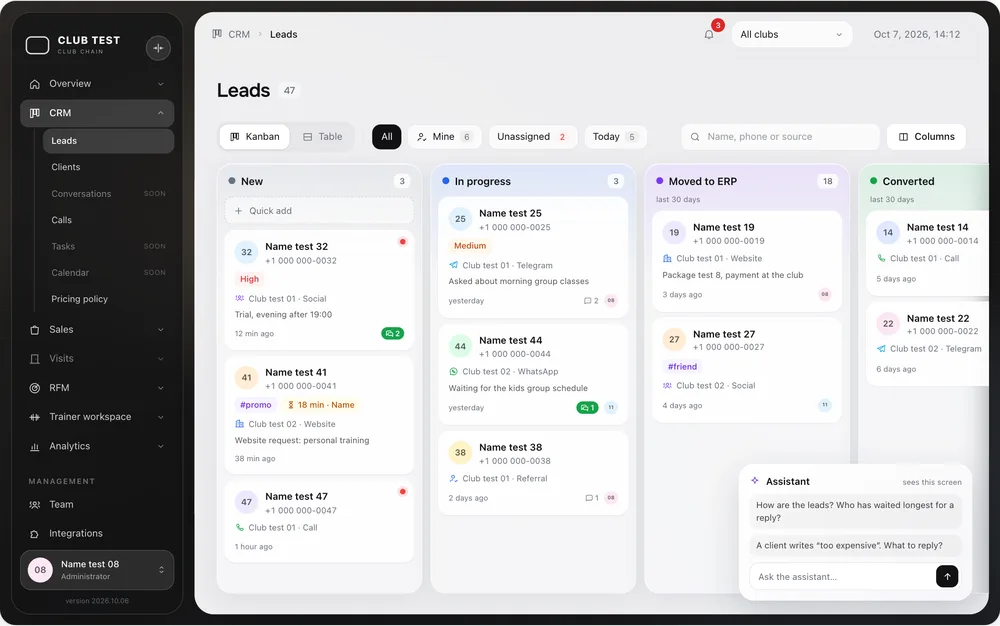
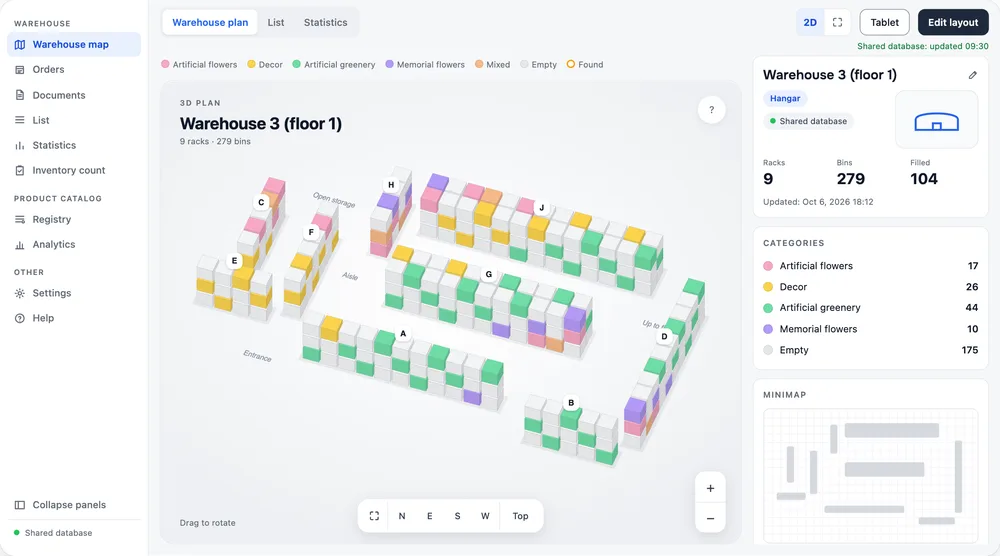
A workspace is shaped around the employee's role: the data they need and the decisions and actions they are responsible for.

Workspace: Line supervisor

Sees the queue of tasks for the shift, readiness and what is holding up the next step.

SeesTheir own line: cutting, shift 2

OrderOperationBlocker
Product test 13Cuttingno materialStalled
Product test 14Cuttingall readyNext
Product test 11Cutting—Done

Let's discuss what is slowing the work down

Send a request. We will get in touch for a short briefing to discuss the problem operation and the current IT landscape and to define the audit format.

A reply comes within response time. The first conversation is short: which operation, what has already been tried, who makes the decision and whether an audit is needed. An audit of one operation ends with a recommendation, and one of the options involves no new software.

Request an operation audit

First it is established how the operation actually works, and only then is it defined how it should work.

Which operation worries you most?

The reply comes where it suits you